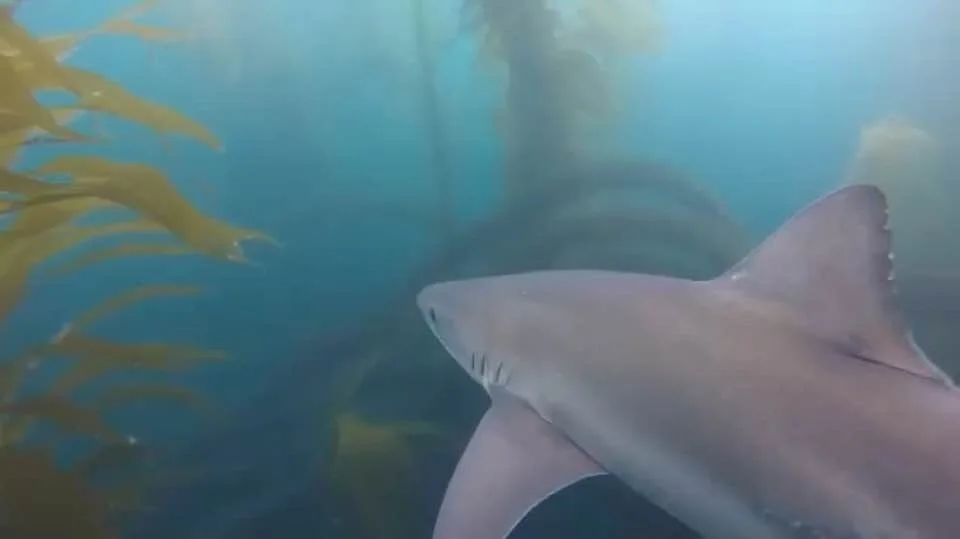
Tope Shark
Galeorhinus galeus
IUCN Red List Category: Critically Endangered
Current Population Trend: Decreasing
Threats: Over utilization, Pollution, Climate Change, Coastal Development
-
The Tope Shark, also known as the school shark or soupfin shark (due to its use in shark fin soup), is a small bentho-pelagic shark (Walker et al. 2020, at 1). The species lives in temperate, shallow waters along coastlines around the world in nearshore habitats (Id., at 7) including shallow bays where pups are raised and remain for up to two years before moving offshore (Id.). Tope sharks’ slow maturation rate and tendency to swim in schools segregated by sex and age make them susceptible to overexploitation (Hernandez 2013, at 118; Walker et al. 2020, at 1). Recovery opportunities are currently limited (Walker et al. 2020, at 10) because multiple sharks within the same school can be caught simultaneously, often inhibiting breeding by removing the species’ reproductive members (Id. at 7).
-
The IUCN categorizes the tope shark as Critically Endangered based on its estimated 88% global population reduction, with the highest probability of >80% reduction over the last three generations (79 years) (Walker et al. 2020, at 6). Dramatic declines in the species’ wild populations have been primarily attributed to relentless overexploitation for human consumption and bycatch (Walker et al. 2020, at 1-2). Habitat degradation and a lack of critical legal and regulatory protections are further exacerbating pressures driving the species to extinction (Id., at 9-10).
-
The tope shark occurs in all major oceans: across the Northeast, Eastern Central, Southwest, and Southeast Atlantic, the Mediterranean Sea, the Eastern Indian, and across the Pacific— except in the Northwest Pacific (Walker et al. 2020, at 1; Galeorhinus galeus, Shark- References). Tope sharks occur on continental shelves and upper- to mid-slopes from shallow inshore to well offshore to depths of 826 m, though most occur frequently at 200 m (Walker et al. 2020, at 1).
Tope sharks are known for far-ranging seasonal migrations that cross multiple states and/or national borders, including the United States (Proposal for the Inclusion of the Tope Shark ((Galeorhinus galeus)) in Appendix II of the Convention, Convention on Migratory Species). One tagging study discovered a tope shark in British Columbia nearly 1000 miles from its original California location (Id.).
Map of tope shark distribution (Walker et al. 2020). Highlighted areas indicate tope shark extant (resident).
Recent research suggests that tope sharks prefer to separate themselves by sex (Walker et al. 2020, at 7). For example, most tope sharks found in Southern California are females while males predominate from Northern California to British Columbia (Meet the Locals: Soupfin Sharks, Birch Aquarium). In central California, some overlap with an equal ratio occurs (Tracking California Soupfin’s Sharks to La Jolla Shores, Shark Stewards). The entire west coast of the United States is prime tope shark territory, as the shark pools in five zones, ranging from La Jolla (San Diego County), the rest of San Diego, Orange and Los Angeles Counties (including Santa Catalina Island), Ventura and Santa Barbara Counties (including the Northern Channel Islands), San Luis Obispo through Sonoma Counties (including San Francisco Bay and the Farallon Islands), and Oregon and Washington (Nosal et al. 2020, at 1572).
California is a breeding ground for tope shark (Tracking California Soupfin’s Sharks to La Jolla Shores, Shark Stewards). Reports suggest that the sharks occupy warmer than average waters to incubate their embryos to minimize the gestation period, which is 12 months (Nosal et al. 2021). After giving birth in warmer waters, such as La Jolla, the adult sharks travel along the central California coast, between San Francisco and the Channel Islands (Id.). Pups remain in the nursery grounds for up to two years (Walker et al. 2020).
-
Overutilization
Range-wide overutilization is the primary factor driving the tope shark’s dramatic decline toward extinction (Tope Shark, Edge). Commonly served as a luxury dish called “shark fin soup,” fins of sharks including tope are considered a status symbol in some cultures and have gained popularity across Asia as well as the rest of the world (From Head to Tail: How European Nations Commercialise Shark Products, Oceana, at 1). While publicity campaigns have reduced the consumption of shark meat and fins in the United States, finning remains a primary threat to shark species as 73 million sharks end up in the global shark fin trade annually (From Head to Tail: How European Nations Commercialise Shark Products, Oceana, at 4-5; Mustain et al., at 1). Despite a clear, international consensus that sharks should be protected globally, sharks—including the tope shark—continue to be exploited into extinction (Id., at 3).
Tope is also harvested for squalene, a lipid in shark livers (Scholl et al. 2021, at 66). Known for having the highest concentrations of vitamin A of any fish in the region, tope sharks on the Pacific Coast are often targeted for this purpose (COSEWIC Assessment and Status Report on the Tope Galeorhinus galeus, Committee on the Status of Endangered Wildlife in Canada, at v). While an abundance of plant-based and synthetic alternatives exist, shark-derived liver oil remains in high demand for use in cosmetics, pharmaceuticals, dietary supplements, sunscreens, and biofuels (Scholl et al. 2021, at 66).
In addition to being targeted directly in fisheries, the tope shark is particularly vulnerable to incidental capture as bycatch in pelagic gillnet and longline fisheries, as well as trawl, hook-and- line, troll lines, trammel nets, and traps due to their preference for teleost fish and tendency to swim in schools (Proposal for the Inclusion of the Tope Shark (Galeorhinus galeus) in Appendix II of the Convention, Convention on Migratory Species). For sharks caught as bycatch and released by industry, the vessel-mortality rate ranges from 2-73% with gillnets and 0% with longlines (Walker et al. 2020, at 8). The danger posed by gillnets is largely dependent on the mesh size (Id. at 9). Bycatch animals become entangled in this mesh around their necks, mouths, and flippers, which prevents proper feeding, constricts growth, causes infection, or leads to extreme fatigue (Fishing Gear: Gillnets, National Marine Fisheries Service).
Pollution
The effects of pollution on Chondrichthyes species are understudied (Consales & Marsili, Assessment of the Conservation Status of Chondrichthyans: Underestimation of the Pollution Threat, at 165). However, as top predators in the food chain, sharks are prone to the accumulation of high levels of toxic pollutants (Kibria & Haroon 2015, at 1). Considering its reliance on near-shore breeding areas, toxicants pose serious threats to the tope shark throughout its range, and in California in particular, given excessive levels of Dichloro-diphenyl-trichloroethane (“DDT”), a synthetic insecticide that was developed in the 1940s to combat disease in military and civilian populations and control insects in crop and livestock production (DDT - A Brief History and Status), in and around important habitats (See O’Shea et al. 1999, at 18).
Sharks position as an apex predator increases their exposure to contaminants that bioaccumulate and biomagnify up the food chain. In sharks, compounds like DDT are stored in the liver and passed from mother to her pups, leaving the pups plagued with DDT poisoning (Kibria & Haroon 2015, at 5, 7).
In light of research on similar species, exposure to and bioaccumulation of DDT and other pollutants likely have played a role in the tope shark’s decline. Studies have revealed elevated levels of both inorganic and organic micropollutants in sharks’ muscle and liver, including heavy metals (e.g., mercury, cadmium, arsenic, lead) and various persistent organic pollutants.
Accumulation of these toxins may make shark species susceptible to long-term effects such as interference with secretions from the rectal gland, changes in heart function, changes in blood parameters, inhibition of DNA synthesis, disruption of sperm production, and death (Id., at 10). Increased pollutant exposure leads to diminished appetite, lowered swimming activity, starvation, and even mortality (Id.). Exposure of marine animals including sharks to persistent organic pollutants (PCBs, DDT) may cause negative effects including birth defects, high infertility rates, endocrine disruption, and other reproductive problems (Id.). In addition to hindering reproductive success, sharks harboring high contaminant loads may be at risk of immune system dysfunction. Otherwise non-threatening diseases may pose an acute or chronic health risk due to sharks’ immune systems operating at suboptimal levels. Warmer sea temperatures associated with climate change could trigger aggressive proliferation of bacteria, further exacerbating the threat of immunosuppression (Sawyna et al. 2017, at 49). In sum, contaminants appear to pose a risk to tope sharks, increasing their risk of extinction.
Climate Change
Sharks are highly likely to shift their distribution or expand into new habitats to follow preferable ocean conditions due to climate change (Effects of Climate Change on Sharks, NMFS). The effects of climate will lead to significant changes in phytoplankton biomass and shifts in species dominance (Id.). An increase in global temperature reduces the turbulent mixing intensity in oceans, which is the leading factor in decreasing the total biomass of phytoplankton (Károly et al. 2020, at 612). The importance of phytoplankton is immeasurable, as they are responsible for nearly 50% of global net primary production, are the primary energy source for aquatic ecosystems, and are of global significance for climate regulation and biogeochemical cycling (Moisan et al. 2013). As the foundation of the marine food web, phytoplankton support successive trophic levels such as zooplankton, organisms that feed on zooplankton such as fish, and then predators that feed on the fish such as seals, sea lions, sharks, and marine mammals (Alberro 2014). Therefore, organisms at the very top of the food chain, including apex predators such as sharks, ultimately depend on the ecological base that is formed by phytoplankton (Id.). Declines in phytoplankton can result in a significant decline in zooplankton populations, which in turn affect secondary and tertiary-level consumers, such as fish and sharks (Id.).
Coastal Development
High voltage direct current subsea cables are believed to negatively impact the tope and other sharks across their migration lanes, especially when feeding and navigating (Walker et al. 2020, at 9). Negative effects of the electric fields created by the subsea cables include effects on predator/prey interactions; avoidance/attraction and other behavioral effects; effects on species navigation/orientation capabilities; and physiological and developmental effects (Taormina et al. 2018, at 16; Carter et al. 2009, at 32). Therefore, both the placement of subsea cables across migration lanes and the utilization of them could be adverse to the tope (Walker et al. 2020, at 9; see Taormina et al. 2018, at 16).

Advocacy in Action
-
February 2022: Tope Shark Listing Petition Submitted
Defend Them All and the Center for Biologial Diversity submits Petition to List the Tope Shark as Endangered or Threated under the Endangered Species Act and designate critical habitat.
-
April 2022: 90-Day Finding on Tope Shark Listing
The National Marine Fisheries Service announced a positive 90-day finding on the petition to list the Tope Shark and designate critical habitat concurrent with the listing.
-
February 2023: NMFS fails to meet legal obligation to issue decision on Tope Shark listing.
-
June 2025: DTA and CBD file lawsuit against NMFS.
Defend Them All and Center for Biological Diversity file a lawsuit against NMFS for failing to issue a timely finding on the 2022 petition to list the Tope Shark and designate critical habitat.
-
April 2026. International Tope Shark Populations Proposed for Protection Under U.S. Endangered Species Act.
The National Marine Fisheries Service proposed to list two tope shark populations — in Southern Africa and the Southwest Atlantic — as threatened under the Endangered Species Act but found that the other four populations do not warrant protections, despite grave threats facing those sharks.