Species Spotlight: Asian Elephant
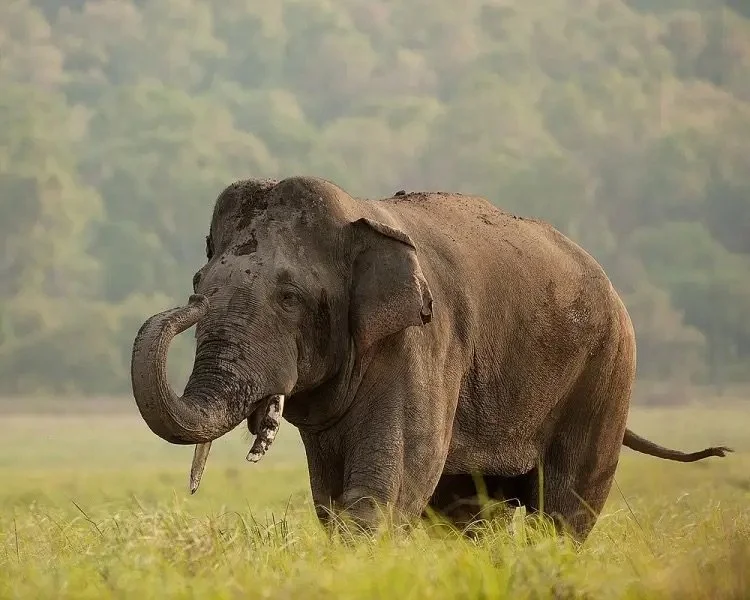
Common name: Asian Elephant
Scientific name: Elephas maximus
Range: Extant (resident) Bangladesh; Bhutan; Cambodia; China; India; Indonesia (Kalimantan, Sumatera); Lao People's Democratic Republic; Malaysia (Sabah, Peninsular Malaysia); Myanmar; Nepal; Sri Lanka; Thailand; Viet Nam
Conservation status: Endangered on the IUCN Red List.
INFORMATION
The Asian Elephant (Elephas maximus) is the largest land mammal in Asia, distinguished by their grey skin, long trunk and large ears (PeerJ). This species resides in a variety of forest, shrubland, and grassland habitats across thirteen range states; Bangladesh, Bhutan, Cambodia, China, India, Indonesia (Kalimantan, Sumatera), Lao People's Democratic Republic, Malaysia (Sabah, Peninsular Malaysia), Myanmar, Nepal, Sri Lanka, Thailand, Viet Nam (The Asian Elephant Specialist Group). They are considered ecological generalists, however, studies suggest they prefer areas with open, grassy spaces and easy access to water sources, including rivers and springs (Global Ecology and Conservation).
Asian Elephants exhibit complex social behaviour and emotional intelligence. Females live in dynamic, matriarchal herds typically consisting of six to seven related individuals and their offspring, led by the oldest female (Acta Ethologica, Behavioral Ecology). In contrast, male Asian Elephants disperse during adolescence (~10-15 years old) and tend to adopt a largely solitary lifestyle (Scientific Reports).
Asian elephants spend up to 17-19 hours a day feeding, during which about 73% of their dry‑season diet consists of tree bark, supplemented with roots, leaves, and small stem. These behaviors that play a critical role in maintaining savanna ecosystems by creating pathways through dense vegetation (Wildlife Biology).7
Asian elephants further support ecosystems by dispersing seeds and promoting vegetation growth. Their grazing behavior also controls the growth of certain plant species and can help prevent wildfires (Frontiers in Forests and Global Change).
Last assessed in 2019, the species is categorized as Endangered by the IUCN due to an inferred population decline of at least 50% over the past three generations (approximately 75 years), based on significant reductions in the quality and extent of the species’ habitat.
As of 2022, the current global wild population of Asian elephants is estimated to be between 58,964 and 62,127 (Environmental Investigation Agency). However, reliable, range-wide population estimates are lacking due to logistical challenges of counting elephants in dense vegetation and difficult terrain.
THREATS AND CONSERVATION
Asian Elephants are increasingly threatened by habitat loss and fragmentation. The expansion of agriculture, infrastructure, and human settlement has severely disrupted forested landscapes, reducing the availability of contiguous, undisturbed habitats essential for their movement and survival.
A significant portion of the Asian elephant population now resides in human-use landscapes adjacent to forest habitats, as the rapid expansion of settlements, plantations, industry, agriculture, mining, and linear infrastructure such as roads and railways has fragmented their historical range, development pressure has compressed elephant herds into increasingly isolated forest habitat islands, often within Protected Areas. As a result, between 1987 and 2015, over 200 wild Asian elephants have lost their lives in train collisions in regions like Assam, West Bengal, and Uttarakhand, underscoring the risks associated with fragmented and human-dominated landscapes (IUCN, PLOS One). The long-term viability of many elephant populations is now at risk, and effective conservation will require a shift beyond the boundaries of Protected Areas to include the surrounding human-influenced landscapes.
Human-elephant conflict (HEC) is a direct consequence of habitat loss and fragmentation and remains one of the most serious threats to the survival of Asian elephants. As forest habitats are converted to settlements, infrastructure, and commercial agriculture, elephants are increasingly pushed into human-use areas, leading to frequent and often fatal encounters with people (The Asian Elephant Specialist Group). These conflicts result in the deaths of both humans and elephants each year, often in regions where their habitats intersect. Climate change has further intensified this dynamic by contributing to shifting rainfall patterns and seasonal drought, reducing the availability of natural resources and increasing the likelihood of elephants raiding crops (IUCN). According to the IUCN, over 600 human and 450 elephant deaths occur annually due to HEC, with India and Sri Lanka accounting for roughly 80 to 85 percent of these incidents (The Asian Elephant Specialist Group). These figures reflect the scale of the crisis and point to the urgent need for land-use planning that prioritizes connectivity, community-led mitigation, and long-term coexistence strategies.
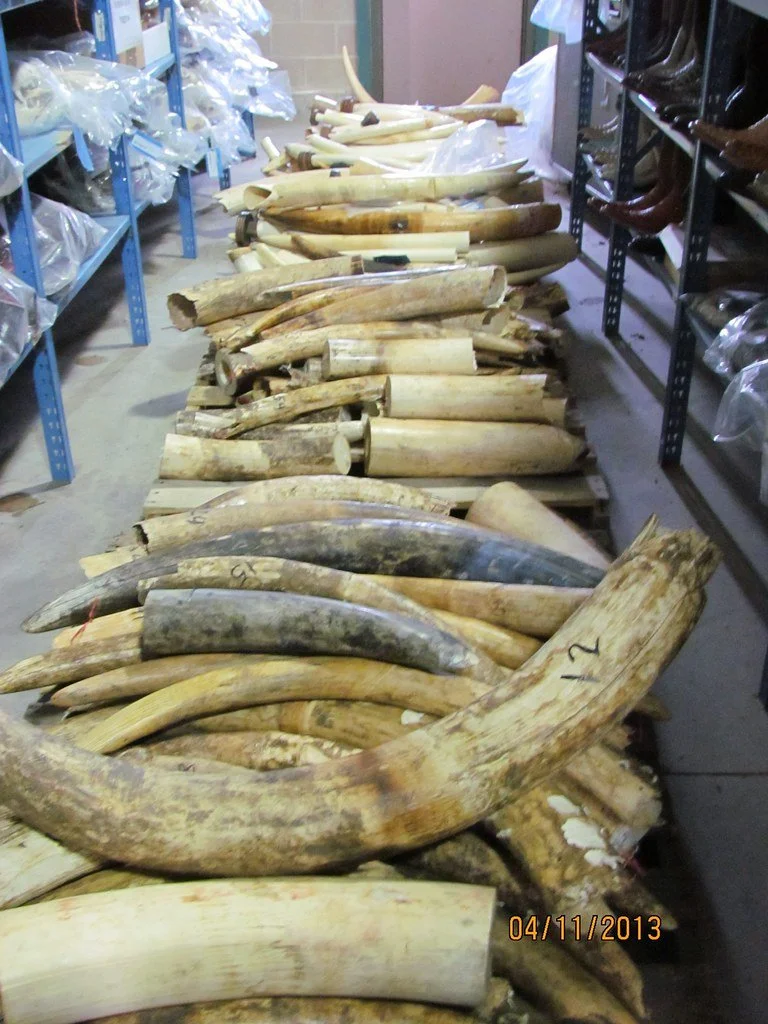
Palle of Raw Tusks by U.S. Fish and Wildlife Service Headquarters.
Poaching is also a significant threat to elephants across Asia. Asian elephants are targeted not only for their ivory, but increasingly for their skin, which is used to produce beads, pendants, and medicinal powders. Unlike ivory poaching, which typically targets males, the skin trade involves the indiscriminate killing of elephants of all ages and sexes, posing a severe threat to the survival of the species as a whole (IUCN).
The illegal trade of Asian elephants is a significant and ongoing threat across Asia. Between 2008 and 2018, researchers documented 55 confirmed cases of the illegal capture and trade of wild Asian elephants in Sri Lanka, revealing a persistent and organized internal market for the species (Nature Conservation). The research found that over half of the elephants involved were ages five years or younger and primarily taken from protected areas and state forests. Moreover, in Thailand, 79–81 wild elephants were illegally captured betwen the years 2011 and 2013 (Nature Conservation). In India illegal calf captures to maintain captive populations is also a prominent issue. The ongoing trade issue is due to weak legal enforecements and a preference for wild-caught elephants over captive breeding, due to long gestation periods, low reproductive success in captivity, and a perception of abundance in the wild (Nature Conservation).
Law and Policy
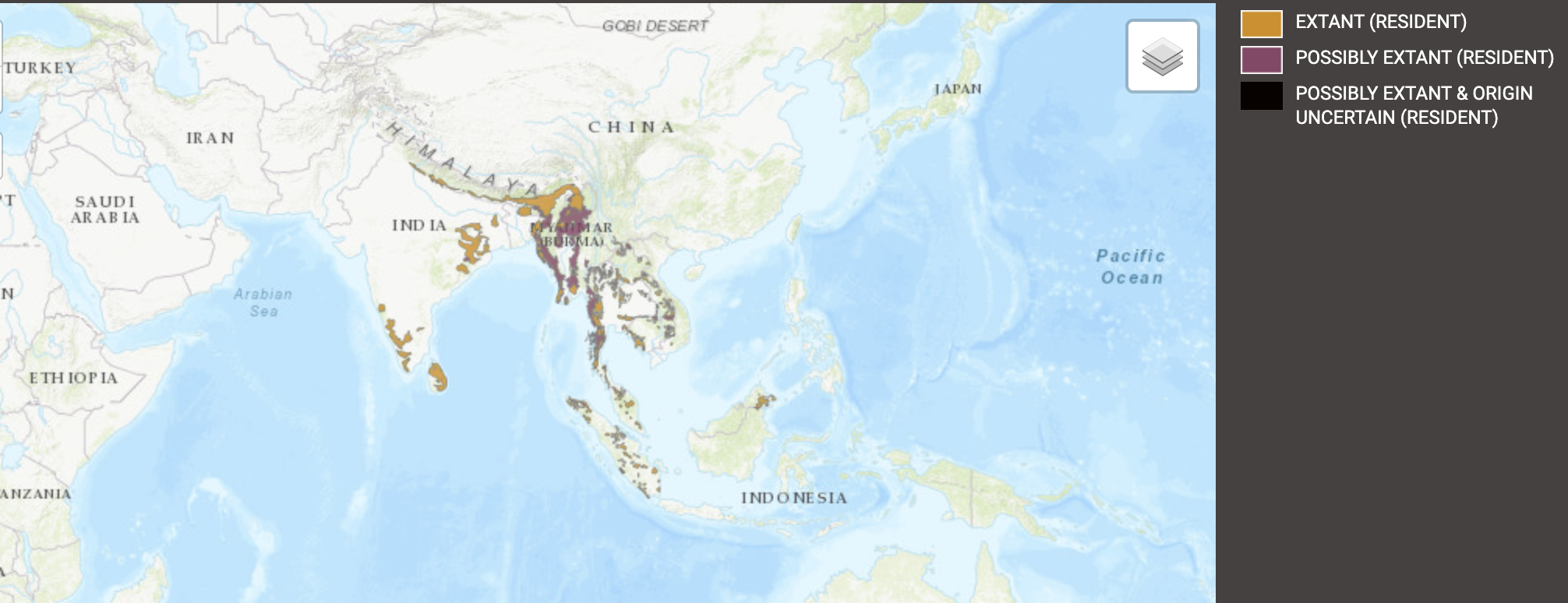
Geographic range of the Asian Elephant provided by IUCN.
Legislative frameworks for Asian elephant conservation exist at both national and international levels, combining legal protections and policy mechanisms to help safeguard the species. Internationally, Asian elephants have been listed in Appendix I of the Convention on International Trade in Endangered Species of Wild Fauna and Flora since 1975, which prohibits international commercial trade in the species and its parts or derivatives, except under limited circumstances such as scientific research or other non-commercial purposes (CITES).
Additionally, in the six range states of the Greater Mekong Subregion (GMS), wild Asian Elephants are protected under national legislation. However, persistent legal loopholes and weak enforcement undermine these protections (Environmental Investigation Agency). For example, in Laos, Myanmar and Thailand, captive elephants can still be traded legally which creates a dangerous loophole through which ivory from wild elephants is easily laundered into the legal market.
Finally, while regional and international frameworks like CITES, the Jakarta Declaration (2017), and the Kathmandu Declaration (2022) aim to combat illegal wildlife trade, the actual implementation of these measures remains unclear and inconsistent across the region. These enforcement gaps leave wild Asian elephants vulnerable to poaching and trafficking, despite formal legal protections (Environmental Investigation Agency).
Recommendations
To address legislative gaps and enforcement challenges that threaten the Asian elephant population in the GMS, several recommendations have been advanced. The Environmental Investigation Agency outlines several key key recommendations to address the ongoing threats posed by illegal trade in Asian elephants. First, it suggest a systematic and continuous updating of information bases on illegal trade threats, urging collaboration among the CITES Secretariat, range states, NGOs, and other stakeholders to better inform conservation and policy measures. Second, it emphasizes the need for full implementation and reporting on CITES Decisions, Resolutions and regional declarations such as the Kathmandu Declaration. This includes annual reports by range countries detailing trade incidents, arrests, and prosecution outcomes. Third, the organization recommends the development of robust, DNA-based registration systems for captive elephants to prevent the laundering of wild individuals and to enhance cross-border management. It also urges countries to review and close legislative loopholes that allow legal ivory markets and trade in elephant parts as well as to strengthen the management of captive populations. Finally, the Environmental Investigation Agency highlights the importance of intelligence-led law enforcement and criminal justice responses. This includes anti-corruption measures to ensure transparency and accountability in tackling organized wildlife crime (Environmental Investigation Agency).

REFERENCES
Ahmed R & Saikia A. (2022) Pandora’s Box: A spatiotemporal assessment of elephant-train casualties in Assam, India. PLOS ONE 17(7):e0271416. doi:10.1371/journal.pone.0271416
CITES. (n.d.) Elephas maximus. CITES Species Checklist. https://checklist.cites.org/#/en/search/output_layout=alphabetical&level_of_listing=0&scientific_name=Elephas+maximus. Accessed 28 July 2025
Environmental Investigation Agency. (2024) The Forgotten Elephants: A review of the illegal trade threat to Asian elephants in the Greater Mekong Sub-region. https://eia-international.org/wp-content/uploads/EIA-2024-The-Forgotten-Elephants-Literature-Review.pdf. Accessed 28 July 2025
Fernando P et al. (2020) Illegal capture and internal trade of wild Asian elephants (Elephas maximus) in Sri Lanka. Nature Conservation 43:75–91. doi:10.3897/natureconservation.43.57283
Minon V. (2020) Asian Elephant Specialist Group report 2020. International Union for Conservation of Nature. https://iucn.org/sites/default/files/2023-09/2020-asian-elephant-sg-report_publication.pdf. Accessed 28 July 2025
Nandini S et al. (2017) Group size differences may mask underlying similarities in social structure: a comparison of female elephant societies. Behavioral Ecology 29(1):145–159. doi:10.1093/beheco/arx135
Neupane D et al. (2019) Habitat use by Asian elephants: Context matters. Global Ecology and Conservation 17:e00570. doi:10.1016/j.gecco.2019.e00570
Ong L et al. (2023) Asian elephants as ecological filters in Sundaic forests. Frontiers in Forests and Global Change 6. doi:10.3389/ffgc.2023.1143633
Pradhan NMB et al. (2008) Feeding ecology of two endangered sympatric megaherbivores: Asian elephant Elephas maximus and greater one-horned rhinoceros Rhinoceros unicornis in lowland Nepal. Wildlife Biology 14(1):147–154. doi:10.2981/0909-6396(2008)14[147:FEOTES]2.0.CO;2
Srinivasaiah N et al. (2019) All-male groups in Asian elephants: A novel, adaptive social strategy in increasingly anthropogenic landscapes of Southern India. Scientific Reports 9(1). doi:10.1038/s41598-019-45130-1
Thitaram C et al. (2018) Histology of 24 organs from Asian elephant calves (Elephas maximus). PeerJ 6:e4947. doi:10.7717/peerj.4947
Vidya TNC. (2013) Novel behaviour shown by an Asian elephant in the context of allomothering. Acta Ethologica 17(2):123–127. doi:10.1007/s10211-013-0168-y
Williams C et al. (2019) Elephas maximus. The IUCN Red List of Threatened Species 2020: e.T7140A45818198.https://doi.org/10.2305/IUCN.UK.2020-3.RLTS.T7140A45818198.en. Accessed 28 July 2025